
Underfloor heating can make a London property more comfortable and energy-efficient, but installation often involves more than laying new heating elements. Depending on the system, contractors may lift existing floor coverings, remove old tiles or adhesive, cut channels, open floor voids, drill through walls and alter electrical or plumbing services. A management survey supports normal occupancy, but intrusive changes to floors may need a specifically scoped refurbishment survey.
In a property built or refurbished before 2000, those activities can disturb materials that may contain asbestos. The practical question is not whether modern underfloor heating contains asbestos, but whether the installation will disturb older floor finishes, adhesives, boards, insulation or concealed building materials.
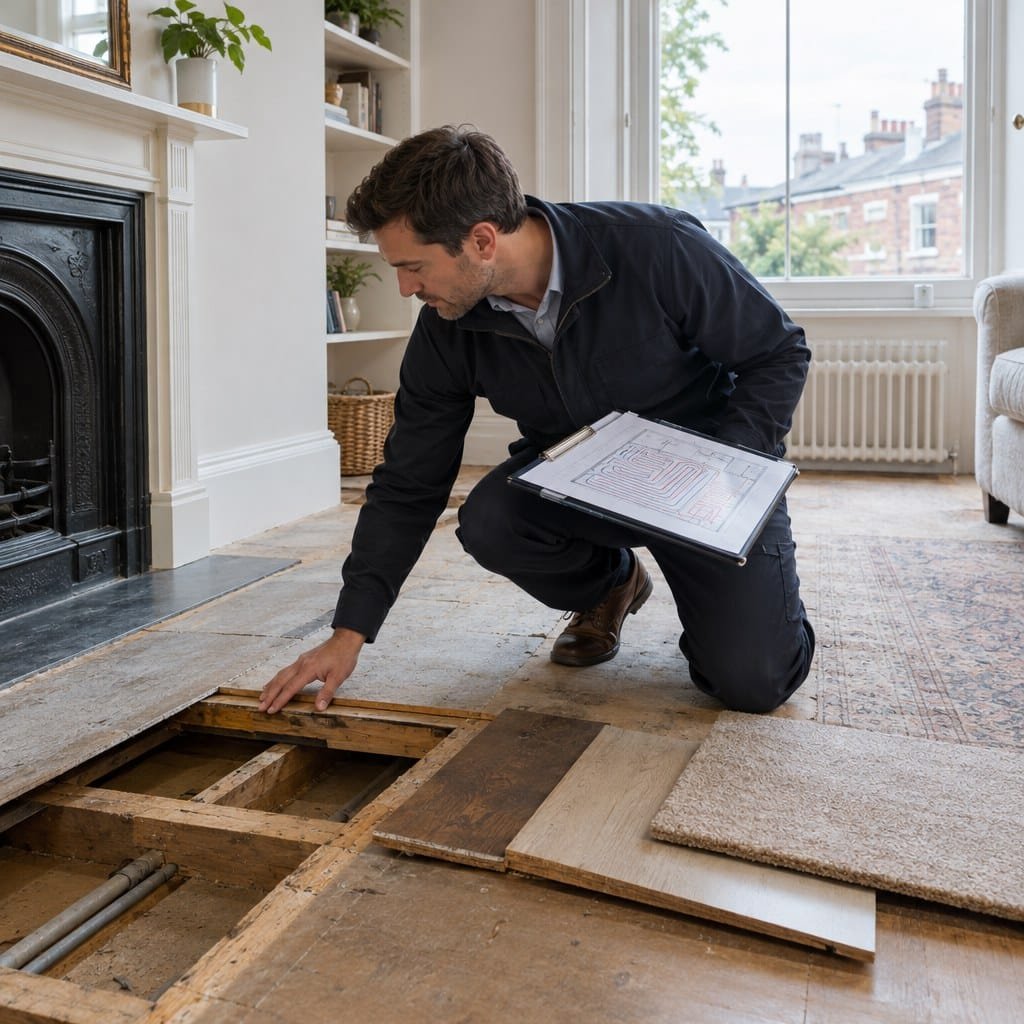
Why underfloor heating installation can disturb asbestos
HSE’s Asbestos: The survey guide (HSG264) explains that refurbishment surveys are intended to locate asbestos-containing materials in areas where building fabric will be disturbed. It specifically notes that management surveys may not provide enough information for more extensive maintenance or repair work and that localised refurbishment surveys may be needed where previously uninspected fabric will be disturbed.
Underfloor heating can involve exactly that type of intrusion: lifting floor coverings, exposing subfloors, cutting channels, drilling for pipe or cable routes and opening service voids.
Which parts of an underfloor-heating project may need checking?
| Installation activity | Possible asbestos-related issue |
|---|---|
| Lifting old vinyl or thermoplastic tiles | Some older floor tiles can contain asbestos. |
| Removing black or bitumen-style adhesive | Some historic flooring adhesives and bituminous products may contain asbestos. |
| Removing sheet flooring or backing | Older resilient flooring products and backing layers may contain asbestos. |
| Grinding, chasing or preparing the subfloor | Previously hidden materials may be disturbed once coverings are removed. |
| Opening timber floor voids | Boards, debris, insulation or service materials below the floor may not have been visible during a management survey. |
| Drilling walls for controls or pipework | Older boards, textured finishes or other concealed materials may be disturbed. |
| Moving radiators or heating services | Older pipe insulation, panels or boiler-area materials may also need consideration. |
Does every underfloor-heating installation need an asbestos survey?
No. The appropriate level of investigation depends on the age and history of the property, the type of underfloor-heating system, the existing floor construction and the extent of disturbance.
An electric mat installed over a confirmed modern floor build-up is different from a wet underfloor-heating retrofit in a 1960s or 1970s property where contractors plan to remove old vinyl tiles, break out screed and reroute pipework through concealed areas.
Where older materials will be disturbed and reliable asbestos information is not already available, suitable checks should be made before work starts.
Electric underfloor heating versus wet systems
Electric systems
Electric underfloor heating may be installed as mats, loose cables or heating film beneath a new floor finish. The asbestos issue usually relates to the existing floor covering and substrate that must be removed or prepared before installation.
If old floor tiles or adhesive are already present, they should not be aggressively scraped, sanded or mechanically removed until their composition is understood.
Wet underfloor heating
Water-based systems can be more intrusive. Depending on the design, installers may remove existing floors, route pipework through joists or screed, alter heating circuits and connect to existing plant.
That broader work scope can increase the number of older materials encountered, especially where the retrofit extends into cupboards, boiler areas or service voids.
Older floor tiles and adhesives
Some historic vinyl and thermoplastic floor tiles contain asbestos. The presence of asbestos cannot be confirmed from colour, size or pattern alone, and not every old-looking tile contains asbestos.
Similarly, some black or bituminous adhesives used with older flooring can contain asbestos, but appearance alone is not enough to identify them.
If floor finishes are going to be removed as part of an underfloor-heating installation, targeted sampling may sometimes be enough where the scope is limited and the materials are accessible. More intrusive work can require a broader refurbishment survey.
See our detailed guide to asbestos floor tiles in London.
What about floor screed and concrete?
Concrete and screed themselves are not automatically asbestos-containing materials. However, underfloor-heating preparation can expose layers beneath or around them, including old floor coverings, adhesive residues, insulation boards or service penetrations.
Where contractors plan to grind, chase or break out an older floor, the survey scope should reflect the full depth of disturbance rather than simply the visible top layer.
Opening suspended timber floors
In older London houses, pipework for wet underfloor heating may be routed below suspended timber floors. Lifting boards can expose materials that were not accessible during a routine visual survey.
HSG264 notes that surveyors may need to inspect under floor coverings and within concealed areas where foreseeable work will disturb them. If a previous survey recorded a relevant floor void as “no access”, that does not confirm the area is asbestos-free.
Management survey or targeted refurbishment survey?
A management survey is mainly intended to support normal occupation and routine maintenance. It is generally less intrusive and may not inspect beneath fixed floor coverings or inside concealed voids.
A refurbishment survey is designed for work that will disturb the building fabric. For an underfloor-heating project, the survey can often be limited to the rooms, floor build-ups, service routes and plant areas affected by the installation.
That targeted approach can provide the contractor with useful information without unnecessarily surveying unrelated areas of the property.
What should you give the asbestos surveyor?
Before arranging asbestos checks, ask the underfloor-heating contractor to explain:
- whether the system is electric or water-based;
- which rooms are included;
- which existing floor finishes will be removed;
- whether screed, concrete or timber flooring will be cut or lifted;
- where pipework or electrical cables will be routed;
- whether walls will be drilled for thermostats or controls;
- whether old radiators, boilers or heating equipment will be altered;
- the expected depth of floor preparation.
This information helps define an appropriate asbestos survey or sampling scope.
Owner-occupied homes, landlords and contractors
The specific duty to manage asbestos under Regulation 4 of the Control of Asbestos Regulations 2012 applies to non-domestic premises and relevant common parts; it does not automatically make every private homeowner a dutyholder.
However, employers and contractors still have duties to assess asbestos risk and prevent exposure before work that could disturb asbestos-containing materials. HSE continues to emphasise that potentially asbestos-containing materials should be properly identified before refurbishment, maintenance or repair work begins where disturbance is likely.
For homeowners, the practical priority is to ensure that installers have suitable information about older floor and building materials before intrusive work starts.
Underfloor-heating asbestos checklist
- Was the property built or substantially refurbished before 2000?
- Will old vinyl, thermoplastic or sheet flooring be removed?
- Is there black or bituminous adhesive beneath the existing floor?
- Will contractors grind, chase or break out screed or concrete?
- Will suspended timber floors or service voids be opened?
- Will walls be drilled for thermostats, controls or pipework?
- Will old heating equipment, pipework or radiator connections be altered?
- Does an existing asbestos report cover the exact rooms and floor build-ups?
- Were any relevant areas previously recorded as “no access”?
What if suspected asbestos is uncovered during the work?
If an unexpected material that may contain asbestos is uncovered, work in the affected area should stop and the material should be left undisturbed until it has been assessed.
The correct response depends on the material, its condition and the work required. Some lower-risk asbestos work can be undertaken by appropriately trained workers using suitable controls, while higher-risk work requires an HSE-licensed contractor.
Finding asbestos does not automatically mean every asbestos-containing material in the property must be removed. The immediate question is whether it will be disturbed by the underfloor-heating project and how the risk should be controlled.
Related London refurbishment guidance
If the heating project forms part of a wider renovation, see our guide to asbestos surveys before renovating a London home. For heating-system alterations, read our HVAC and heating replacement guide. If contractors will drill walls for new controls or cabling, see our guide to asbestos checks before drilling and cabling.
Need asbestos checks before underfloor heating in London?
If you are planning electric or wet underfloor heating in a London property, we can help define an asbestos survey or sampling scope around the floor finishes, subfloor, service routes and heating equipment that will be disturbed.
Request an asbestos survey quote and include the property type, approximate age, rooms involved and the installer’s proposed floor preparation method.
This article provides general information and does not replace a property-specific asbestos assessment or professional advice.